
However, leverage also increases risk, and the more borrowing or fixed costs, the recording transactions higher the burden to meet those obligations. Always assess the interest rate of debt when evaluating financial leverage to ensure returns exceed borrowing costs. “Simply put, debt and equity availability will always be greater than equity alone; what one can purchase using both will always be more substantial.” Leverage also gives you increased buying power, which is why it can provide amplified returns, but that isn’t always the main goal.
The Essential Problem Solving Skills Course Toolkit
Clear can also help you in getting your business registered for Goods & Services Tax Law. In business, it means getting more done with the same amount of resources, or achieving more with less. It’s not tied to any specific resource—rather, it’s a mindset, a strategy, an approach to doing business that prizes efficiency and impact over mere effort. It means using various resources to achieve business goals more effectively and efficiently. Like how a lever allows you to move a heavy object with less effort than you could do on your own.
Data Center Service Delivery Infrastructure Technical Analyst
The right amount of leverage varies by investor and situation, but in general, too much leverage is when the potential losses exceed your ability to cover those losses. Your investment goals also affect whether or not you should use leverage. For example, you might have an aggressive risk tolerance, but that doesn’t mean leverage aligns with your investment goals, like saving for retirement. Reinvent critical workflows and operations by adding AI to maximize experiences, real-time decision-making and business value. Accelerate the business value of artificial intelligence with a powerful and flexible portfolio of libraries, services and applications.
Administrative Director of Facility Operations
Gabriel Freitas is an AI Engineer with a solid experience in software development, machine learning algorithms, and generative AI, including large language models’ (LLMs) applications. Graduated in Electrical Engineering at the University of São Paulo, he is currently pursuing an https://jorditraveria.com/2024/06/19/quickbooks-bookkeepersmall-biz-bookkeeping-3/ MSc in Computer Engineering at the University of Campinas, specializing in machine learning topics. Gabriel has a strong background in software engineering and has worked on projects involving computer vision, embedded AI, and LLM applications. Minimum margin requirements vary significantly among different types of investments. For stock investments, for example, the initial margin requirement is generally 50%, and after that the minimum amount of equity needed, known as maintenance requirement, is 25% under FINRA rules.
- Speech recognition, also known as speech-to-text, is the task of reliably converting voice data into text data.
- For example, in rapidly evolving industries like technology, businesses may need to re-evaluate their strategies more frequently, perhaps even monthly.
- Company A has total debt of $250,000 and total shareholder’s equity of $750,000.
- A firm or individual employs leverage with the hope that the returns on the investment will exceed the cost of the borrowed funds.
- Similarly, a franchise model can leverage a strong brand and operational systems to scale quickly through partnerships with franchisees, each contributing a share of their revenue.
- To do this, it needs its own data centre, server hardware and more staff to take care of maintenance and support.
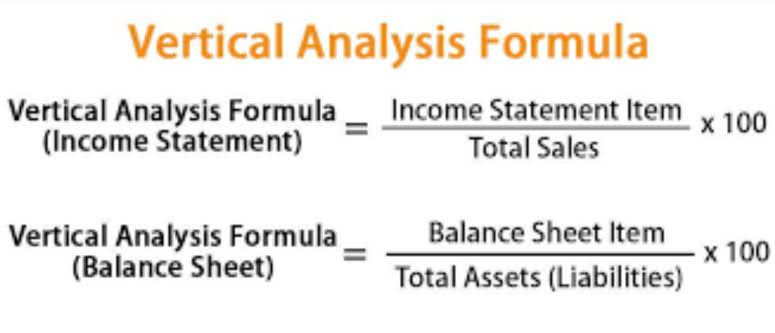
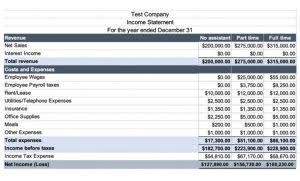
- Suppose you need to calculate the operating margin ratio of a business that you’re analyzing.
- Imagine you want to buy 100 shares of a company where each share costs $50.
- They borrow money and invest it on the capital market or in other assets (e.g. real estate).
If done right, leverage should always produce a positive Return on Investment (ROI). In fact, ROI is a key performance metric used to evaluate the efficiency or profitability of such an investment. When you utilize leverage—be it financial leverage like loans or operational leverage like technology—you’re essentially amplifying your resources. For example, if a company has a degree of operating leverage of 2.5 and a degree of financial leverage of 1.8, the combined leverage is 4.5. This means that a 10% increase in sales will result in a 45% increase in earnings per share, but a 10% decrease in sales will cause a 45% decrease in earnings per share. A business model can act as a powerful lever, multiplying profits by streamlining operations, lowering costs, and maximizing revenue generation.
Operations Watch Technician (Swing Shift)
- For example, the software-as-a-service (SaaS) model leverages technology to deliver software solutions to a large customer base at minimal marginal costs.
- The ratio between two variables is always taken into account and is then referred to as the leverage ratio.
- Investors can also exploit the leverage effect by borrowing money and investing it on the capital market or in other assets, such as real estate.
- It can also mean the amount of debt a company uses to finance its assets.
- The higher the proportion of fixed costs, the higher the company’s operating leverage.
- For stock investments, for example, the initial margin requirement is generally 50%, and after that the minimum amount of equity needed, known as maintenance requirement, is 25% under FINRA rules.
Trend analysis is a type of finance ratio analysis used to evaluate a company’s financial performance by comparing data over multiple periods to identify consistent patterns, movements, or tendencies. If you put down $50,000 and borrow $200,000 to buy a $250,000 house, you’re using financial leverage. If the house appreciates to $300,000, your $50,000 investment has generated a $50,000 gain – a 100% return on your initial investment. Without leverage, you would have needed $250,000 to achieve the same dollar gain.

Companies with high operating leverage have a large proportion of fixed costs relative to variable costs in their operations. Margin is a form of leverage that involves using existing cash or securities as collateral to increase one’s buying power in financial markets. With margin, you can borrow money from a broker to purchase securities or other investments, increasing your potential returns.
Word of the Day for School Assembly 28 January 2026 with Meaning
Let’s explore how to leverage your resources to improve the way you do businbess and enhance your impact. In the example below, two companies in the same industry have assets of $1,000,000. The following articles highlight some of the ways economists use data to explore everything from the impact of climate change to popular financial advice. No matter why you are interested in economics, the American Economic Association is here to help. Browse our resources pages to learn more, and make sure to follow us on Facebook (AEAjournals), X (@AEAjournals) and Bluesky (@AEAjournals). A microeconomist might focus on families’ medical debt, whereas a macroeconomist might focus on sovereign debt.

Word of the Day: Hypothecation — here’s today’s word meaning, usage, and real-world applications
The key word here is “fixed” – these are costs that don’t change regardless of how much the company produces or sells. Take, for example, a small business that takes out a loan to expand its operations with the goal of increasing its revenues and profits. By borrowing, the business can potentially enhance its growth beyond what it could achieve with only its current resources. If the company invests the borrowed money in a project that generates returns higher than the interest payments on the debt, then the company successfully leverages its investment. Leverage in economics and finance refers to the use of various financial instruments or borrowed capital—such as debt—to increase the potential return of an investment. It can also mean the amount of debt a company uses to finance its assets.
Operating Leverage (OL)

This value indicates how high the share of debt capital is compared to equity capital. Leverage ratios are vital metrics that evaluate the extent and effectiveness of a company’s use of leverage. Understanding these ratios helps in making informed financial decisions. Consider a company that takes what is financial leverage out a loan at a 5% interest rate to invest in a project expected to yield a 12% return.